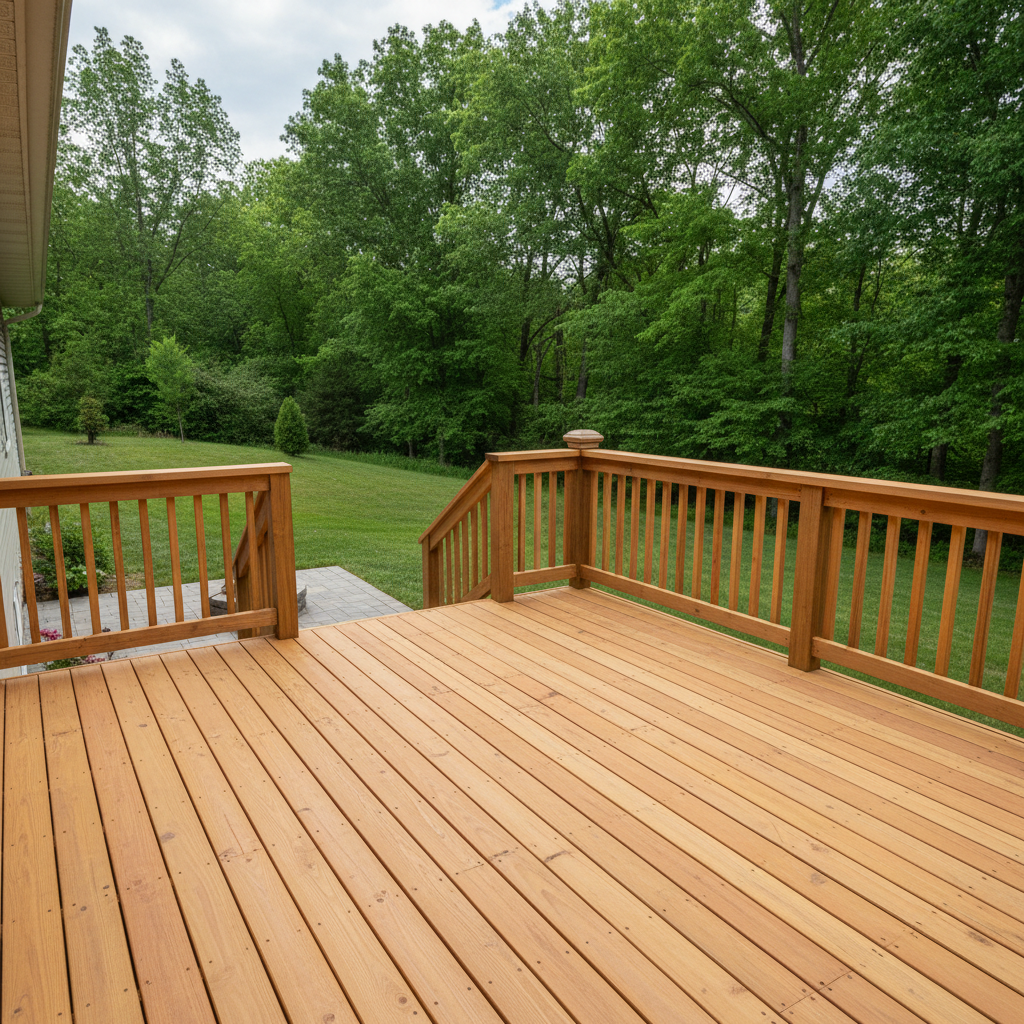
Wooden decks take a beating around here. If you live near the Schuylkill River or up on the ridges in Berks County, you already know how quickly humidity, heavy spring rains, and freezing winter snow can wear down untreated lumber. Neglect wood decks for a couple of seasons, and you will find yourself staring down a costly repair bill. Keeping wood healthy is not difficult, but it does take consistency.
What Regular Maintenance Actually Looks Like
Homeowners do not need to spend every weekend working on their outdoor space, but they do need a seasonal routine. Start every spring with a thorough sweep to clear off the wet leaves and organic debris that collect in corners and between boards. Trapped debris holds moisture, and moisture is the number one enemy of a wood deck.
- Wash the surface gently to lift pollen, dirt, and mildew without gouging the wood fibers.
- Check every single railing post and stair tread to make sure nothing has worked loose over the winter freeze-thaw cycles.
- Apply a fresh coat of penetrating sealer or stain every two to three years depending on how much direct sunlight your backyard gets.
Aim High Deck Solutions always tells homeowners that if water stops beading up on the surface and instead soaks right into the boards, it is time to reseal.
Warning Signs You Shouldn't Ignore
Catching problems early saves you from major headaches down the road. Keep an eye out for telltale warning signs of trouble.
- Soft spots or spongy wood near the ledger board or around post bases where moisture lingers longer in the dense local soil.
- Pop-up nails or screws backing out as the wood expands and contracts through changing seasons.
- Green algae patches or dark black mold that make the steps dangerously slick after a heavy rain.
- Wobbling railings that give way when you lean on them.
If a board starts to cup or split badly, swap it out before someone catches a splinter or twists an ankle.
When to Call a Professional
Some weekend chores are easy to handle yourself, but structural issues require an experienced hand. If you notice sagging joists, rust eating through your metal joist hangers, or rot spreading into the main support posts attached to your house, put down the hammer and call a professional. Structural stability is not something you want to guess at, especially when you are hosting family gatherings or backyard cookouts. Getting a pro to inspect the understructure every few years ensures your deck remains safe and solid for the long haul.